
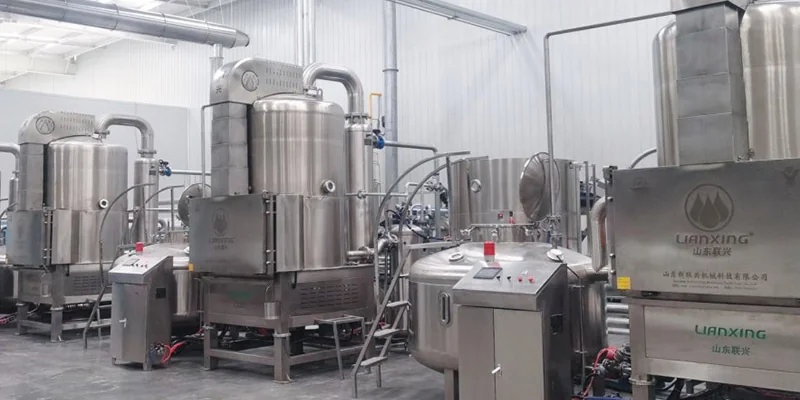
Vacuum frying technology is an important breakthrough in the field of modern food processing. Unlike traditional high-temperature frying, vacuum frying is carried out in a low-pressure environment, which can significantly lower the processing temperature (usually controlled at 80-110℃), effectively preserving the natural nutrients, color and flavor of ingredients and ensuring consistent product quality. At the same time, the equipment is equipped with a de-oiling system that achieves deep oil removal in a vacuum environment, reducing the oil content of the final product by 40%-60% compared with traditionally fried products, which better meets modern consumers' demand for healthy food. It also significantly reduces the formation of harmful substances such as acrylamide. Thanks to years of technical accumulation and innovation, Shandong Xinlianxing's vacuum fryer has reached an internationally advanced level in key technologies such as temperature control, oil circulation system and degree of automation.
Recently, the vacuum frying equipment of Shandong Xinlianxing Machinery Co., Ltd. was successfully installed, commissioned and put into production at the production site of a Sri Lankan customer, marking an important step for Chinese food processing equipment in the South Asian market and injecting new technological momentum into Sri Lanka's fruit and vegetable deep-processing industry.
After the equipment arrived in Sri Lanka, Xinlianxing dispatched a ** engineer team, which overcame language and cultural differences and completed equipment installation, system commissioning and technical training in one week. This successful cooperation is not just the export of a single piece of equipment, but a deep integration of Chinese food processing technology with Sri Lanka's specialty agriculture. Through the ** technical equipment, we hope to help Sri Lankan customers enhance the competitiveness of their products and jointly develop fruit and vegetable crisp products suitable for both local and international markets.
The successful application of Shandong Xinlianxing vacuum fryers in Sri Lanka demonstrates China's transformation from "Made in China" to "Intelligently Made in China". It is not only the export of equipment, but also the ** exchange of technical standards, production concepts and management experience. Against the backdrop of deepening economic and trade cooperation between China and Sri Lanka, such technological cooperation will bring more win-win opportunities to the food industries of both countries and help Sri Lanka's specialty agricultural products reach a broader international market.